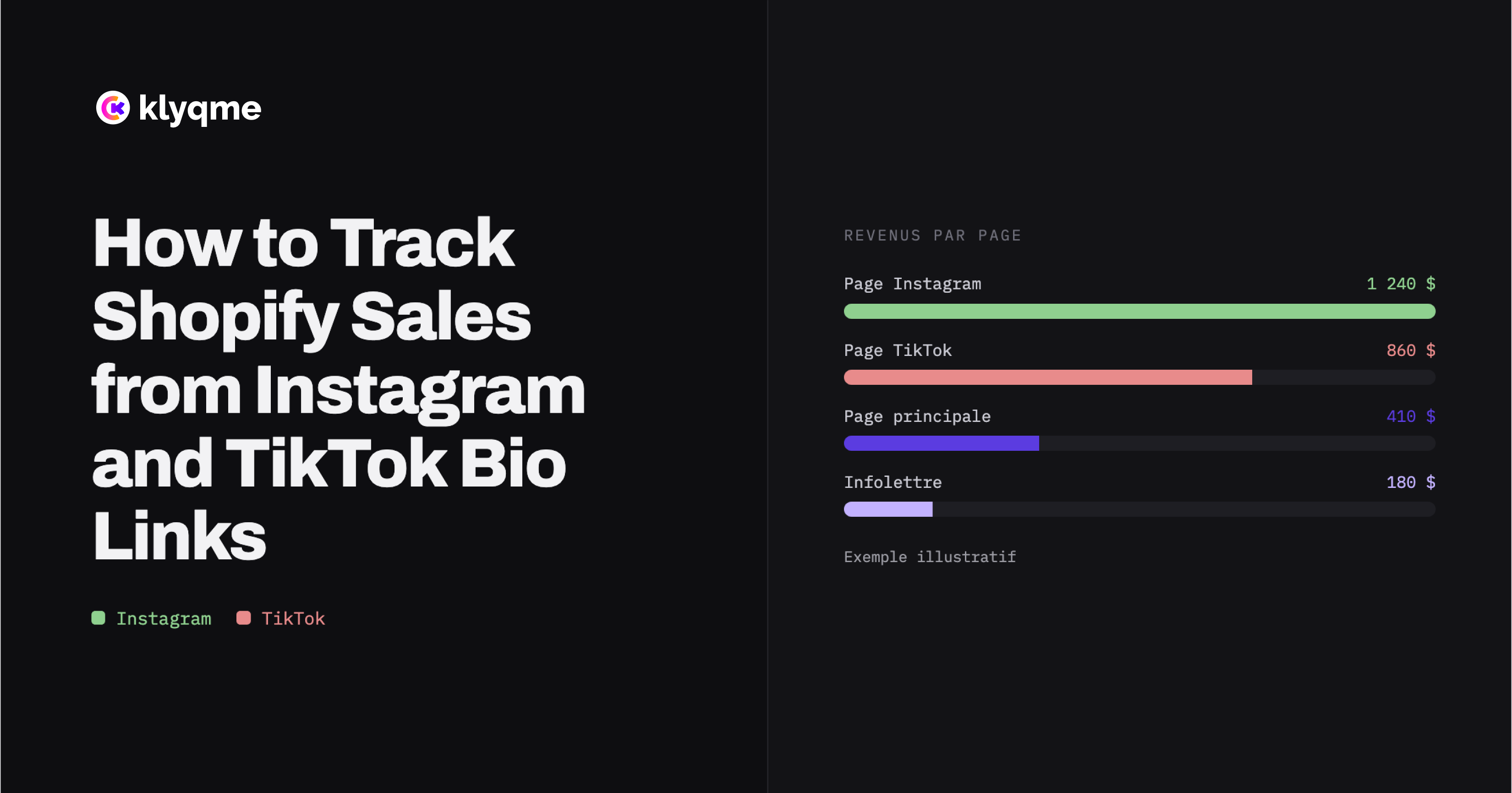
A sale that begins on social media rarely happens in one clean, observable step. A shopper sees a Reel or TikTok, visits a profile, opens a bio page, taps a product, reaches Shopify, and may buy immediately or return later.
If Instagram and TikTok share one generic link with no campaign structure, that journey becomes difficult to evaluate. Shopify may record the order, but the team cannot confidently answer which profile, campaign, or page earned the visit.
The solution is not a single magic attribution number. It is a measurement chain with clear responsibilities:
- Klyqme records visits to the bio page.
- Klyqme records outbound product clicks.
- UTM parameters identify the source and campaign after the visitor leaves.
- Shopify remains the source of truth for checkout, payment, and completed orders.
This guide explains how to build that chain without pretending browser attribution is perfect.
Define the funnel before choosing metrics
Use four stages:
| Stage | Event | Primary system |
|---|---|---|
| Discovery | A person sees social content | Instagram or TikTok |
| Visit | The person opens the bio page | Klyqme |
| Product intent | The person taps a product or purchase button | Klyqme |
| Purchase | Shopify accepts the order | Shopify |
These numbers answer different questions. Bio-page visits measure traffic. Product clicks measure intent. Orders measure revenue. Do not label every outbound click as a sale.
Two ratios are especially useful:
- Product click rate = product clicks divided by bio-page visits
- Purchase rate = Shopify orders attributed to the campaign divided by product clicks
The first ratio diagnoses the page. The second diagnoses the transition from the page into the Shopify buying flow.
Give Instagram and TikTok separate destinations
The cleanest setup uses one page group with a dedicated variation or URL for each channel. The merchandise can remain the same while the order, message, and featured product change.
For example:
- Instagram visitors see the product featured in the current Reel first.
- TikTok visitors see the product demonstrated in the pinned video first.
- Newsletter visitors see an offer framed for returning customers.
Separate destinations prevent channel attribution from depending on guesswork. They also let you compare page behavior through A/B tests without rebuilding the store.
If maintaining several pages is not practical, use one page but preserve distinct UTM values in each profile link. Separate pages are stronger because they improve both measurement and relevance.
Use a UTM naming system that stays readable
UTM parameters are useful only when everyone uses the same vocabulary. Choose the taxonomy before publishing links.
A practical structure is:
| Parameter | Instagram example | TikTok example |
|---|---|---|
utm_source | instagram | tiktok |
utm_medium | social | social |
utm_campaign | fall_launch | fall_launch |
utm_content | profile_reel_03 | profile_video_07 |
Use lowercase values, avoid spaces, and keep campaign names stable across platforms. Put the creative or placement in utm_content, not in utm_campaign, so a campaign can be compared as a whole.
Do not create a new naming convention every week. ig, instagram, and instagram_profile used as three different sources will fragment the same channel in reports.
Track the bio page and every commercial exit
A useful commerce bio page needs more than a page-view counter. Product cards, collection links, campaign buttons, and direct checkout actions should be measured separately.
Klyqme records the click before sending the visitor to the destination. This reveals which product block attracted attention even when no order follows. The page can also carry account or block-level UTM parameters into the outbound destination.
That distinction gives you actionable diagnoses:
- High visits and low product clicks usually indicate weak page relevance, unclear products, or excessive choice.
- Strong product clicks and weak Shopify conversion suggest a pricing, inventory, shipping, trust, or checkout issue.
- Low visits cannot be fixed only by redesigning the page. The social content and profile call to action need work.
For implementation details, see the Shopify link-in-bio guide and the guide to adding Shopify products to an Instagram bio.
Let Shopify confirm revenue
The Shopify order is the commercial truth. Use Shopify reports to confirm orders, gross sales, discounts, returns, and net sales. Compare those records with the UTMs and time windows used by your campaigns.
This matters because a visitor can:
- decline tracking consent;
- switch browsers or devices;
- open the product today and buy tomorrow;
- return through a direct visit;
- share the destination with another person.
No responsible report should promise exact person-level attribution in all those cases. Use Klyqme to measure page behavior and outbound intent, then use Shopify to confirm purchases. When the systems disagree, keep both facts rather than forcing one number.
Build a simple weekly report
You do not need a complicated dashboard for the first analysis. Create one row per channel and campaign:
| Channel | Bio visits | Product clicks | Click rate | Shopify orders | Revenue |
|---|---|---|---|---|---|
| TikTok |
Add notes for stockouts, promotions, major posts, and tracking changes. A conversion drop during a stockout does not mean the creative failed.
Review the report in this order:
- Confirm the tracking setup did not change.
- Compare traffic volume by channel.
- Compare product click rate.
- Compare completed Shopify orders and revenue.
- Review the actual page and checkout experience before changing creative.
Weekly reporting is usually more useful than reacting to daily noise, especially for small stores with limited order volume.
Keep paid and organic traffic distinguishable
If you run ads, do not reuse the organic profile URL. Paid social should use its own medium and campaign values. For example, use paid_social for ads and social for organic profile traffic.
You can also install consent-aware retargeting pixels on the public page. Pixels help advertising platforms build audiences and report campaign activity, but they do not replace first-party page analytics or Shopify orders. Read the retargeting pixels guide before enabling them.
Common attribution mistakes
Using the same untagged link everywhere
This hides the difference between Instagram, TikTok, email, and direct traffic.
Treating clicks as purchases
A purchase button click is intent. Only Shopify can confirm that an order was created and paid.
Changing UTMs during a campaign
Inconsistent names split one campaign into several rows and damage comparison.
Ignoring variant availability
A campaign can generate strong intent while the promoted size or color is unavailable. Review inventory before judging the page.
Looking only at last-click revenue
Social content often creates demand before another visit completes the order. Use attributable orders as a practical signal, not a complete account of influence.
Measurement checklist
Before launching a campaign:
- Create a dedicated Instagram and TikTok destination or variation.
- Apply a consistent UTM taxonomy.
- Verify product links open the intended Shopify product or checkout.
- Test at least one available variant on mobile.
- Confirm page views and product clicks appear in analytics.
- Confirm Shopify receives the expected UTM parameters.
- Record the launch time and current stock.
- Keep Shopify as the final order and revenue record.
The goal is not to produce a perfect attribution model. It is to make the next marketing decision with better evidence than a generic profile link provides.
Sources
Frequently asked questions
Shopify can report acquisition information when campaign parameters and referral data survive the journey. Separate URLs and consistent UTMs make that reporting more useful, but privacy controls and cross-device behavior can still create gaps.
No. Klyqme records the page visit and outbound click. Shopify confirms the checkout, payment, and order.
They should at least use distinguishable URLs. Dedicated variations are better when the channels need different products, messages, or ordering.
`utm_source` separates Instagram from TikTok, while `utm_campaign` groups activity around the same launch. The whole naming system matters more than any one parameter.
No. Pixels, UTMs, page analytics, and Shopify orders serve different purposes. Use them together and respect consent requirements.